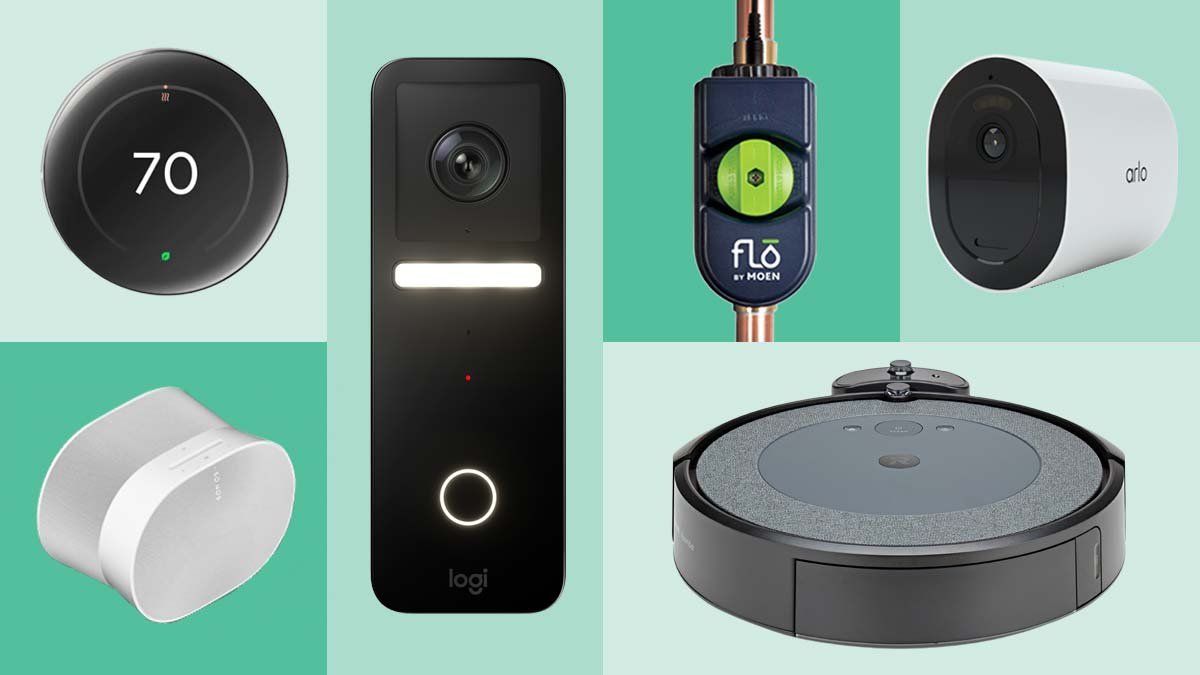
Smart home technology has evolved from a collection of expensive gadgets into an increasingly practical part of modern living. Smart lights, security cameras, thermostats, speakers, locks, sensors, and appliances can now be controlled through smartphones, voice assistants, and automated routines.
But having a home filled with connected devices does not automatically make life easier. Some products genuinely solve everyday problems, while others add complexity without providing much practical value.
The key question in 2026 is no longer simply whether a device is “smart.” It is whether the technology provides enough convenience, security, efficiency, or automation to justify its cost.
Here are the smart home technologies that are generally worth considering.
1. Smart Lighting
Smart lighting remains one of the easiest ways to begin building a connected home.
Smart bulbs and switches can be controlled through mobile applications, voice commands, schedules, and automated routines.
For example, lights can automatically turn on around sunset or switch off when everyone leaves the house.
Smart lighting can also be useful for creating different environments. A single room might use bright lighting during work hours and softer lighting in the evening.
Another advantage is remote control. If you accidentally leave a light on while away from home, you may be able to turn it off remotely.
However, not every room needs sophisticated lighting automation. Starting with the rooms you use most frequently can provide the best value.
2. Smart Security Cameras
Home security is one of the strongest reasons to adopt smart technology.
Connected cameras can allow homeowners to monitor entrances, gardens, garages, and other areas through a smartphone.
Many modern cameras offer motion detection and notifications, making it possible to receive an alert when activity is detected.
Some systems can distinguish between different types of movement, such as people, vehicles, or animals.
When choosing a camera, image quality is only one consideration.
Privacy, storage, encryption, subscription costs, night vision, installation requirements, and access controls are equally important.
A camera that requires an expensive monthly subscription may ultimately cost much more than expected.
3. Smart Doorbells
Video doorbells combine security and convenience.
They can notify homeowners when someone approaches a door and allow them to see or communicate with visitors remotely.
This can be particularly useful when receiving deliveries.
A smart doorbell may also provide a record of activity around an entrance, although local laws and privacy considerations should be taken into account when recording people.
As with security cameras, users should pay attention to data storage and account security.
A strong password and multi-factor authentication can help prevent unauthorized access to the camera.
4. Smart Plugs
Smart plugs are among the simplest smart home devices.
They can turn ordinary appliances into remotely controlled devices without requiring the appliance itself to be “smart.”
A smart plug can be programmed to switch a lamp on at a specific time, for example.
They can also be useful for appliances that need to be turned off automatically.
However, users should always verify that a smart plug is rated appropriately for the appliance being connected.
Not every electrical device is suitable for every type of smart plug.
5. Smart Thermostats and Climate Control
Smart climate-control systems can provide convenience while potentially improving energy efficiency.
A smart thermostat can learn schedules, adjust temperatures automatically, and allow remote control.
Instead of heating or cooling an empty home unnecessarily, users can create schedules that match their routines.
In regions where conventional thermostats are not widely used, other smart climate devices can provide similar benefits, including connected air conditioners, fans, and environmental sensors.
The potential savings depend heavily on the building, climate, equipment, and how the system is used.
Smart technology itself does not automatically guarantee lower energy bills.
6. Smart Sensors
Sensors may be less exciting than smart displays or cameras, but they can be among the most useful devices in an automated home.
Motion sensors can detect activity.
Door and window sensors can indicate whether an entrance is open.
Water-leak sensors can provide alerts when moisture is detected.
Temperature and humidity sensors can monitor environmental conditions.
These devices can become especially powerful when connected to other systems.
For example, a door sensor could trigger a light to turn on, while a water sensor could immediately send an alert to a homeowner’s phone.
7. Smart Locks
Smart locks can provide another layer of convenience.
Depending on the model, users may be able to unlock doors using a smartphone, fingerprint, PIN, or other authentication method.
Temporary access can also be useful for guests, cleaners, maintenance workers, or short-term visitors.
However, smart locks deserve careful consideration because they control physical access to the home.
Security should therefore be prioritized over convenience.
Users should research the manufacturer’s security practices, update the lock’s software when necessary, and protect the associated account.
A traditional physical key may also be useful as a backup depending on the design.
8. Smart Speakers and Displays
Smart speakers and displays can serve as control centers for connected devices.
Users can issue voice commands to control lights, check information, play music, set timers, or manage routines.
Smart displays can additionally show cameras, calendars, weather information, and other visual content.
Their usefulness depends heavily on how integrated the rest of the home is.
If you only have one smart bulb, buying an expensive smart display may not make much sense.
But in a home with multiple connected devices, a central interface can make automation easier.
9. Robot Vacuum Cleaners
Robot vacuum cleaners have become increasingly capable.
Modern models can map rooms, avoid obstacles, schedule cleaning sessions, and return to charging stations automatically.
For busy households, this can save considerable time.
The biggest advantage is not necessarily that a robot vacuum cleans better than a person. It is that it can perform routine cleaning with minimal involvement.
Some models can also mop floors.
Before purchasing one, consider the size and layout of your home, floor types, furniture, maintenance requirements, and replacement-part costs.
10. Smart Appliances
Refrigerators, washing machines, ovens, coffee makers, and other appliances are increasingly being connected to the internet.
Some smart appliances provide genuinely useful functions.
A washing machine might notify you when a cycle is complete. An oven may allow remote monitoring. A refrigerator could provide alerts when a door has been left open.
However, connected features do not automatically make an appliance better.
If a smart function adds significant cost but provides little practical benefit, a conventional appliance may be the better purchase.
The most valuable smart appliances are those where connectivity solves a specific problem.
11. Energy Monitoring
Energy-monitoring devices can help homeowners understand electricity consumption.
Instead of simply receiving a monthly electricity bill, users can obtain more detailed information about usage patterns.
This can reveal which devices consume the most energy and when consumption increases.
Some systems can provide real-time information, while others track usage over longer periods.
This information can help homeowners make more informed decisions about appliances and energy habits.
For households concerned about electricity costs, energy monitoring may offer more practical value than purely entertainment-focused smart devices.
12. The Importance of Compatibility
One of the biggest challenges with smart home technology is compatibility.
Not every device works equally well with every ecosystem.
Before buying several products, users should consider which platforms they intend to use and whether the devices support common standards.
Interoperability is becoming increasingly important because consumers do not want to replace every device when they change ecosystems.
Choosing products with broad compatibility can provide greater flexibility over time.
13. Privacy Should Be a Major Consideration
Smart home devices can collect significant amounts of information.
Cameras may record video. Speakers may process voice commands. Sensors can reveal when people are home. Applications can collect information about device usage.
This makes privacy an important consideration.
Before purchasing a connected product, users should understand what information it collects, where that information is stored, how long it is retained, and what security controls are available.
Strong passwords, multi-factor authentication, regular software updates, and careful permission management are essential.
What Smart Home Technology Is Actually Worth Buying?
For many households, the best starting point is not an expensive complete smart-home system.
A practical setup could begin with smart lighting, a few smart plugs, security sensors, and perhaps a camera or video doorbell.
From there, additional devices can be added when they solve specific problems.
The best smart home is not necessarily the one with the largest number of devices.
It is the one where technology quietly performs useful tasks without constantly demanding attention.
Conclusion
Smart home technology can make everyday life more convenient, secure, and efficient, but not every connected product is worth buying.
Smart lighting, security cameras, sensors, smart plugs, climate controls, robot vacuums, and carefully selected appliances can provide genuine benefits.
At the same time, buyers should consider privacy, security, compatibility, subscriptions, maintenance, and long-term support before purchasing.
The smartest approach is to identify a real problem first and then find technology that solves it.
In 2026, smart home technology is becoming less about owning impressive gadgets and more about creating an environment that works intelligently in the background.